


AI Photo Generator: Muselab AI
4.7268.00 Reviews
App Specs
- Version
- 2.0.0
- Updated On
- License
- Free
- Downloads
- 1,000,000+
- Developer
- Shotcut Video Workshop
- Categories
- Photography
- Platform
- Android
Screenshots
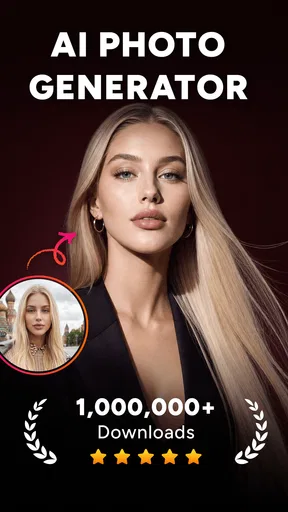
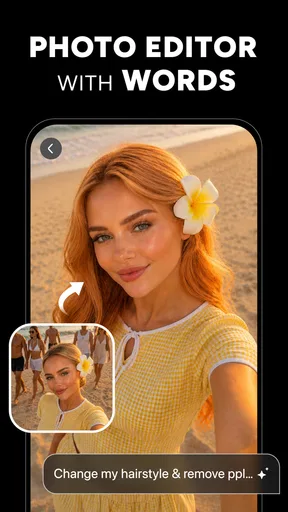
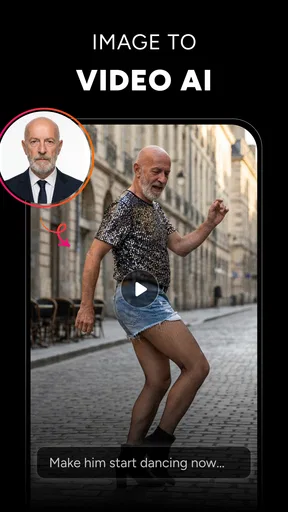
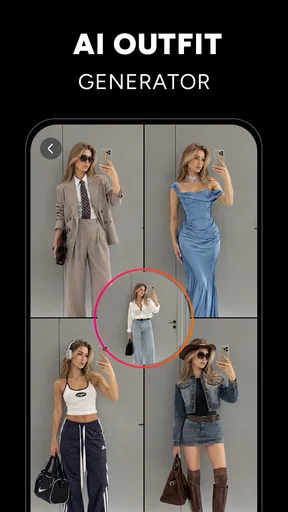
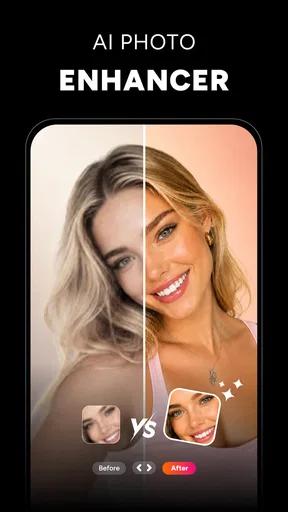
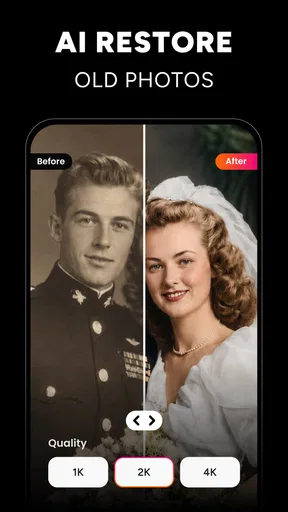
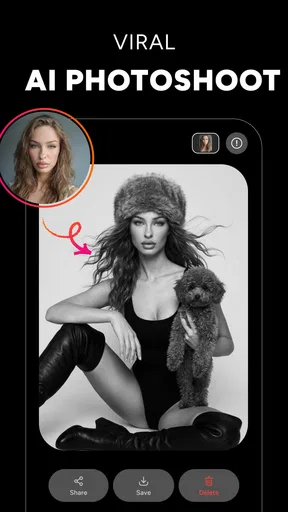
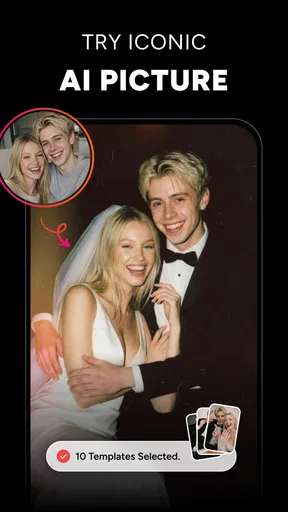
 Analysis by AppCompare
My first question with an AI photo app is practical: will it help me make something I want to keep or share, or will it merely produce an image that looks interesting for a few seconds? Muselab AI is aimed at that creative middle ground, where you want to try a different look without turning photo-making into a desktop project. I see its main appeal in AI-generated imagery, with filters and editing available in the same photography app. The important distinction is that a striking result is not automatically a faithful one.
When I’m deciding whether a generated picture is useful, I think about where it will end up. A playful image for a chat has different demands from a picture meant to represent a real person or product accurately. Keeping that purpose in mind makes the app easier to enjoy—and helps me avoid treating a creative transformation as if it were a neutral correction.
Muselab AI is a free photography app from Shotcut Video Workshop, with a 4.7 average from around 23,000 ratings. It has more than a million installs, and its content rating is Everyone. The Android version requires 8.0 or later, which gives many phone users a straightforward starting point for trying it. What matters more than those figures, though, is whether its mix of generation and editing fits the way you actually make pictures.
What AI image generation changes
I find AI image generation most useful when I treat it as a way to explore a visual direction, not as a shortcut to a more accurate photograph. That distinction changes what I look for in the results: I’m judging mood and suitability rather than expecting every detail to remain true. The next section looks at how I’d turn that idea into a practical routine.
From a photo idea to a new visual
The capability I would focus on is AI image generation. Instead of treating a photo only as something to crop or adjust, this kind of tool lets you pursue a visual result that may look quite different from the original. That can be useful for playful portraits, mood-board material, profile-image experiments, or an illustration-like direction when you do not have the time or skill to create one from scratch.
There is a meaningful difference between generating an image and editing a photograph. Traditional editing usually tries to preserve the person, object, and moment already in the frame; generation can reinterpret them. If I need a dependable record of an event, that distinction matters. If I want a fresh visual direction to try, it may be exactly the point.
The app also brings AI filters and photo editing into the same photography experience. That combination is useful when I want to explore a visual idea and then make a few finishing adjustments without switching apps. I treat the convenience as a starting point, though, rather than assume every generated result will arrive ready to share.
Worth Reading Before You Choose

Baby Panda World Brings Quick Play to Modern Phones, but Its Game Library Feels Busy

ESPN’s Live Game View Makes Following Close Games Easier

QuizzLand Review: A Good Fit for Short Trivia Breaks, Not Every Player

Basketball Stars: Multiplayer Is Fast, but Can It Recover When Matches Go Wrong?

WEBTOON Turns Phone Updates Into a Better Reading Routine

Link to Windows Runs on Shared Habits, Not Social Feeds
Why realism is both a strength and a risk
A realistic-looking result can feel more immediately usable than an obviously fantastical one, especially for a personal avatar or a concept image meant to look photographic. But realism raises expectations. A small inconsistency in a face, hand, item of clothing, or background can be conspicuous precisely because the overall picture looks convincing at first glance.
My practical habit is to inspect a result at normal viewing size before sharing it. I look at details that carry the meaning of the picture: a person’s expression, a logo, a familiar object, or the edge where the subject meets the background. A quick glance on a small screen can hide awkward details that become obvious in a larger post—or to someone who knows the original subject.
Set a visual target before experimenting
I get more useful results when I decide what I want the picture to feel like before I start. “A warmer, more relaxed profile image” gives me a clearer test than “make this better.” The point is not to write a perfect instruction; it is to have a standard for judging the result. Without one, it is easy to keep generating variations because each is different, not because each is closer to what I need.
I also separate the source photo from any version I experiment with. That is a simple safeguard: the imaginative treatment does not take the place of the picture I may want later. If I am making something for a small project, I keep the generated image identified as an interpretation, rather than letting it blend into a folder of factual photos where I could mistake it for the original.
How I would use it day to day
For everyday use, I’d keep the task small: choose one image, decide what I want it to communicate, and compare the altered result with the original before sharing. That makes experimentation easier to judge and helps prevent a striking effect from becoming the goal by itself. A familiar profile-photo scenario shows where this approach can be useful—and where I’d draw the line.
Keep the goal narrow
AI tools are easier to assess when I start with one clear purpose. If I want a profile picture with a different mood, I would settle on the mood first instead of asking for a broad transformation and then struggling to judge the output. If I am making a playful image for a group chat, I can be more relaxed about exact likeness. A clear goal makes it easier to tell whether a result works or is merely novel.
For a useful workflow, I would keep the original image separate from the version I experiment with. That way, an imaginative treatment does not replace the source I may need later. I would also compare a few plausible outcomes rather than becoming attached to the first one; with generative work, the first result can be visually striking without being the best fit for the intended use.
One less obvious trade-off is that a strong transformation can make an image feel less personal. If the point is to preserve a specific memory, subtle editing is often better than an AI reinterpretation. If the point is to create an alternate version of yourself or a scene, that loss of documentary accuracy may be acceptable. Deciding which kind of image I want before editing saves time and disappointment.
A realistic everyday example
Imagine I have a decent portrait but want a more distinctive picture for a social profile. I might use an AI treatment to explore a different visual mood, then compare it with the unaltered shot and choose the version that still feels like me. I would check facial details closely and avoid using the generated image for anything where exact identity or faithful representation matters.
That same workflow can help with a small creative project: I could use an image as inspiration for a presentation or personal mood board, then keep the generated result clearly separate from factual photographs. The benefit is speed and experimentation, not proof that a scene happened. If accuracy matters, a conventional editor that preserves the source photograph is the safer choice.
Make the comparison useful
When I am choosing between a generated version and the original, I compare them for the job they need to do, not just for which one looks more dramatic. For a profile image, I ask whether it still feels recognizable and whether the expression suits the setting. For a concept board, I care more about whether the colors and overall mood communicate the idea. This keeps the decision grounded in use rather than novelty.
I would also avoid stacking several strong treatments simply because they are available. If a generated image already has a distinct visual character, additional effects can make it harder to see what is working. Keeping one version with minimal finishing changes gives me a clearer reference if I later want to return to the original direction.
Where filters and editing fit
Having filters and editing in the same app may reduce the friction of finishing a picture after generation. I would use those tools with restraint: a generated image can already have a strong look, and piling on effects may make it feel overworked. A small correction can help an image sit comfortably beside other photos; a second dramatic treatment can obscure the details I wanted to keep.
This is also where I would be realistic about the app’s role. A phone app is convenient for quick experiments and sharing-ready personal images. Someone doing careful retouching, preparing print work, or matching a precise color style across a batch may prefer a dedicated photo editor with controls designed for that level of consistency. Muselab AI’s appeal is the creative shortcut, not a replacement for every specialist workflow.
The trade-offs behind the shortcut
The convenience is real, but a generated image asks me to trade some predictability for creative range. I’d be more cautious when the picture represents a real person, product, or event, and I’d also consider whether optional purchases make sense for how often I use the app. Those limits help clarify the kind of person who is likely to appreciate this style of editing.
Creative freedom versus faithful editing
The central limitation is not a flaw unique to this app; it comes with generative imagery. The more a result departs from the source, the less I can rely on it to represent the original subject accurately. That makes the feature a poor fit for evidence, professional documentation, product images where details must be exact, or portraits where a person expects their appearance to remain unchanged.
There is also a judgment call about how much alteration feels right. A dramatic AI image may be entertaining, but it can look artificial or unlike the person it depicts. Before posting, I would ask whether the intended audience will understand it as a creative edit. That small pause is especially useful when the image includes friends or family who did not ask to be transformed.
Costs and expectations
The app is free to install, while in-app purchases range from $4.99 to $49.99 per item. I would explore the free experience before spending, then decide whether the particular tools I use often enough justify a purchase. The range is a good reason to check the purchase details in the app instead of assuming every capability is included at no cost.
AI generation can also involve more iteration than applying a simple filter: a picture may need several attempts before it feels right. That is the trade-off between creative range and predictability. If I need a quick, repeatable correction such as a straightforward crop or brightness adjustment, a conventional editor is likely the more direct tool. If I want to explore imaginative possibilities, generation makes more sense.
Choosing among familiar alternatives
Compared with a standard photo editor, Muselab AI is the more interesting choice when I want a transformed or newly imagined look, rather than precise manual control. Compared with a dedicated AI art tool, its combination of generation, filters, and editing may be convenient for someone who wants to keep a casual photo workflow together. Those are different priorities, not proof that one app is universally better.
I would choose a conventional editor for accurate retouching, consistent adjustments, or work where the original image must remain recognizable. I would choose a more specialized creative tool if I needed a tightly controlled illustration workflow. Muselab AI seems most relevant in the middle: a phone-first way to try realistic AI imagery and make casual creative refinements without treating the process as professional production.
What to check before sharing
A useful final check is to look at the image both as a picture and as a message. Does it suggest something about a real person or event that is not true? Does it change a detail that matters to the viewer? For a joke or a personal creative experiment, that may be harmless; for a public-facing profile or project image, clarity about the image’s altered nature can prevent confusion.
I would be especially cautious with images of other people. A transformation that seems amusing to me may not be welcome to the person pictured, and a realistic-looking result can be mistaken for an unedited photo. Choosing a less sensitive subject—or getting the person’s agreement—can make experimentation more considerate without taking the fun out of it.
Who is likely to enjoy it
I’d recommend trying it to someone who enjoys visual experiments and is comfortable reviewing the result rather than accepting the first version. Someone who needs precise, repeatable corrections is likely to be happier with a conventional editor, while a person seeking a new look may value the creative shortcut. The closing section weighs those different needs and offers my overall recommendation.
Curious creators and casual photo users
I can see this app suiting people who enjoy trying new looks, making personal images, or creating visual material for informal sharing. It is particularly useful for someone who has an idea but does not want to learn a complex desktop application just to test it. The current version, 2.0.0, is the version to look for when checking compatibility and app details on a supported Android device.
It is less suitable for people who want every edit to preserve exact photographic truth, need fine-grained control over each adjustment, or dislike the trial-and-compare nature of AI output. It may also frustrate anyone expecting a single tap to deliver a perfect image every time. I would approach it as a creative assistant: helpful for starting directions, but still requiring a human eye to choose and review the result.
When another kind of app is the better fit
If my main task is to correct exposure, remove a small distraction, or keep a set of photos looking consistent, I would reach for a conventional editor first. Those jobs reward predictable controls more than reinterpretation. Likewise, if I am building a carefully directed illustration and need close control over every visual element, a specialized creative tool is a more sensible starting point than a casual photo workflow.
Muselab AI makes the most sense when I want to see an alternate look quickly and am comfortable evaluating what the system has changed. That is a narrower job than “edit any photo,” but it is also a clearer reason to try it. If the generated direction is not useful, I can return to the original and use a more precise tool instead.
My recommendation
Muselab AI is worth trying if the main draw is experimenting with AI-generated photo looks and having filters and editing close at hand. Its free entry point lowers the barrier, while the optional purchases make it sensible to test the experience before committing money. I would use it for playful portraits, profile-image ideas, and visual inspiration, not for images that must document reality without alteration.
My overall take is positive with a clear boundary: this is a tool for visual exploration, not a guarantee of faithful photography. If you enjoy comparing possibilities and are willing to inspect the details before sharing, it can make everyday image-making more inventive. If your priority is accuracy, repeatability, or detailed manual control, a conventional editor will serve you better. Use it when you want to imagine a different picture, and keep the original when the real one matters.
Pros
- Quickly turns text prompts into AI-generated images.
- Offers a simple workflow suited to first-time users.
- Useful for exploring visual ideas without drawing skills.
- Can help create images for social posts and personal projects.
- Makes experimenting with different creative concepts easy.
Cons
- Generated results may not closely match detailed prompts.
- Some features or image generations may require payment.
- Output quality can vary between prompts and attempts.
- AI-generated images may need editing before they are ready to share.
- Check privacy terms before submitting personal photos or sensitive prompts.
FAQs for AI Photo Generator: Muselab AI
What is AI Photo Generator: Muselab AI?
AI Photo Generator: Muselab AI is an app designed to create or transform images with artificial intelligence. Depending on the tools available in the current version, you may be able to start from a text prompt, upload a photo, or use a preset style to guide the result. Features and supported options can change with updates, so check the app listing for the latest details.
Do I need an account or an internet connection to use Muselab AI?
AI image generation commonly relies on online processing, so an internet connection may be needed to create or edit images, even if some browsing options work offline. Whether you must register, sign in, or provide other details depends on the app’s current setup. Review its onboarding screens and privacy information before sharing personal information or uploading images.
Is AI Photo Generator: Muselab AI free to download and use?
The app may be free to install while offering paid features, subscriptions, credits, or limits on how many images you can generate. Pricing and free-use allowances can vary by platform, region, and version. Before starting a trial or confirming a purchase, read the store’s pricing information carefully and check how renewals, cancellations, and unused credits are handled.
Can I use the images made with Muselab AI for commercial purposes?
Do not assume that generated images are automatically cleared for commercial use. The rights you receive, restrictions on particular styles or subjects, and rules for uploaded photos are governed by the app’s terms and the policies of the platform where you share the work. Read those documents before using an image in advertising, products, or other commercial projects.
Are my photos and prompts private when I use Muselab AI?
Photos and prompts submitted to an AI generator may be processed on remote servers, and the app’s privacy policy should explain how that information is stored, used, or shared. Avoid uploading sensitive images or identifying details unless you understand those practices. You can also review requested permissions and remove access to your photo library when it is not needed.


